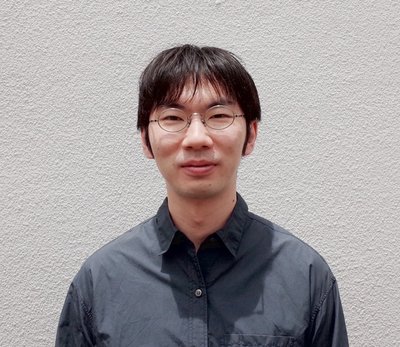
Hiroki Kojima
小島 大樹
Associate Professor
Scientist of Life & Information
Hiroki Kojima, Ph.D. (Physics), is a complex‑systems scientist who investigates how information dynamics at biological, artificial, and social interfaces give rise to adaptive behavior and cognition.
His research ranges from quantitative studies of human dyadic interaction and cognitive‑map formation in generative neural networks, to unifying the continuous cellular automaton Lenia with reaction–diffusion physics, building ALife–BLife hybrid systems, and analyzing the collective behavior of the ciliate Tetrahymena. Each project combines fine‑grained behavioral data, information‑theoretic metrics, and computational modeling to expose the self‑organizing dynamics that emerge at interfaces.
He began his research career as a Research Fellow at the University of Tokyo in 2018. He then joined Alternative Machine Inc. as a Senior Researcher, and since 2021 has held a Project Researcher post in computational psychiatry at the National Center of Neurology and Psychiatry.
He seeks to clarify the principles by which life and cognition co‑emerge through information dynamics—linking microbes, minds, and machines—and to design systems in which artificial and biological life together realize new forms of being.
Courses
- Practical Antidisciplinary Problem Solving I
- Practical Antidisciplinary Problem Solving II
- The Antidisciplinary Approach to the Modern World (DNA)
- Advanced Complex System Science
- Complex System Science
- Advanced Research in Doctoral Program I
- Advanced Research in Doctoral Program II
- Advanced Research in Doctoral Program III
- Advanced Research in Master's Program
- Modern Physics
- Modular Practice Seminar
Publications
-
Community First Theory: How Collective Organization Generates Individual Diversity
Entropy (2026) -
Language or Syndrome? Investigating the Origins of the General Psychopathology Factor through Large Language Model Embeddings
Psychiatry and Clinical Neurosciences (2026) -
Predicting Individual Food Valuation via Vision-Language Embedding Model
PLOS Digital Health (2025) -
The Glider Equation for Asymptotic Lenia
arXiv (2025) -
Using Dynamical Systems Theory to Quantify Complexity in Asymptotic Lenia
Artificial Life Conference Proceedings 37 (2025) -
Evolution of Collective AI Beyond Individual Optimization
arXiv (Cornell University) (2024) -
Revealing gene expression heterogeneity in a clonal population of Tetrahymena thermophila through single-cell RNA sequencing
Biochemistry and Biophysics Reports (2024) -
Perceptual Distortions in PredNet and Quantification of Top-down/Bottom-up Flow
PsyArXiv (2024) -
Life-like Behavior of an Oil Droplet in an Aqueous Surfactant Solution: Comparative Analysis with Tetrahymena Movement and Numerical Investigation
(2023) -
Evolving Collective AI: Simulation of Ants Communicating via Chemicals
Artificial Life Conference Proceedings 35 (2023) -
Implementation of Lenia as a Reaction-Diffusion System
ALIFE 2023: Proceedings of the 2023 Artificial Life Conference (2023) -
Organization of a Latent Space structure in VAE/GAN trained by navigation data
Neural Networks (2022) -
Analysis and Design of Social Presence in a Computer-Mediated Communication System
Frontiers in Psychology (2021) -
Spatial and temporal Taylor’s law in 1D chaotic maps
Chaos An Interdisciplinary Journal of Nonlinear Science (2021) -
Artificial Cognitive Map System based on Generative Deep Neural Networks
Artificial Life Conference Proceedings 33 (2021) -
A Sensorimotor Signature of the Transition to Conscious Social Perception: Co-regulation of Active and Passive Touch
Frontiers in Psychology (2017) -
A new design principle for an autonomous robot
ECAL 2017 (2017)